Second event · Continuation Salon · Concluded · Boston Tech Week · May 26, 2026

Building Superintelligence for Humanity

A completed continuation salon on shared cognitive infrastructure.

The second event in the Superintelligence for Humanity series has now concluded. This intimate Boston Tech Week gathering continued the conversation opened by the May 18-19 summit and prepared the next phase of work: deeper technical discussions and working workshops on Artificial Collective Intelligence as the cognitive infrastructure through which humans, agents, and institutions can reason, coordinate, preserve provenance, respect consent, and learn together.

Harvard University · Cambridge, MA

Fireside chat

Featured conversation

A dedicated fireside conversation on inclusive AI infrastructure, cultural fluency, agency, and the institutional conditions for building systems in service of humanity.

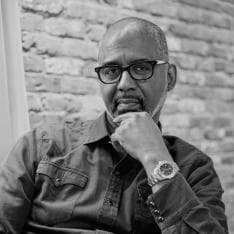
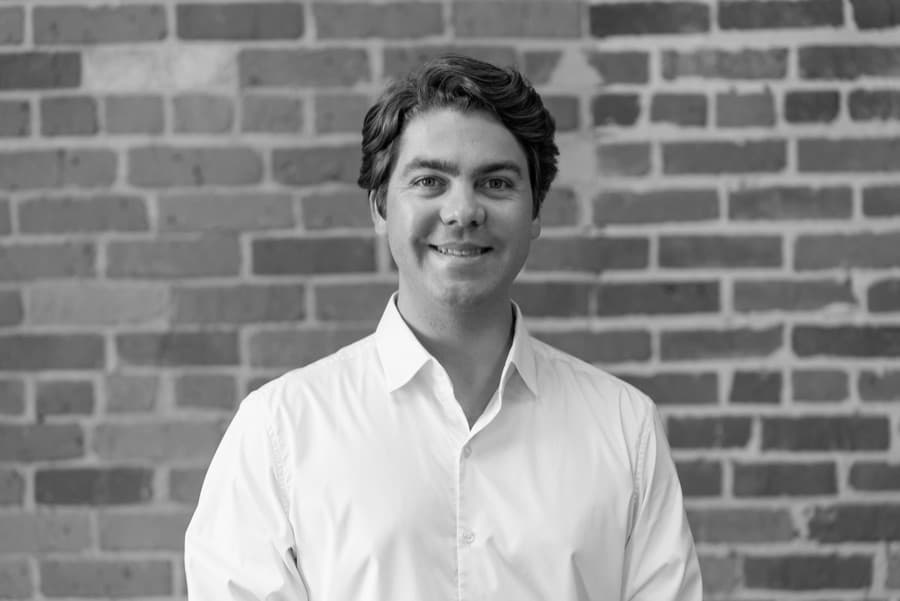
John Pasmore

Fireside chat speaker

John N. Pasmore

Latimer.ai

Board Director | Partner | VentureBeat Generative AI Visionary Award

John builds inclusive AI infrastructure through LatimerAI, advancing culturally fluent language models for education, healthcare, and public-interest use.

Profile

Speakers

Panel speakers

Speakers from the completed continuation salon.

Brian T. O'Neill

Brian T. O'Neill

Design and product strategy

Speaker

Brian brings a product-design lens to how advanced systems become understandable, usable, and agency-preserving for people and institutions.

Profile
Patrick Duffy

Patrick Duffy

Solv Labs

Speaker

Patrick builds verifiable-AI infrastructure for regulated insurance and reinsurance capital, with deep experience in logistics innovation and standards.

Profile
Sam Nathans

Sam Nathans

Boston Blockchain Association

Panel speaker

Sam works across blockchain, linked data, digital identity, privacy, and systems governance, translating deep technical systems into institutional language.

Profile
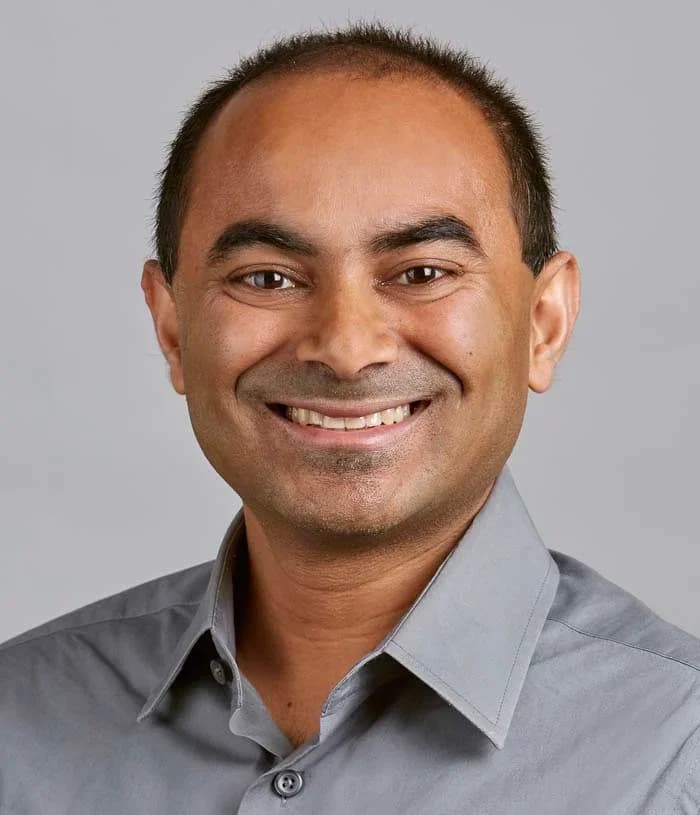
Ujjwal Kumar

Ujjwal Kumar

Harvard / Cognisee PBC

Speaker

Ujjwal bridges Harvard, Cognisee PBC, Quantum Alliance, and civic innovation networks to turn ACI research into partnerships and pilots.

Profile

Hosts

Organizers and MC

The continuation salon was organized as part of the Superintelligence for Humanity research meeting series.

Ahmer Inam

Ahmer Inam

Cognisee PBC

Organizer

Profile
Olaf Witkowski

Olaf Witkowski

Cross Labs / Cognisee PBC

Organizer

Profile
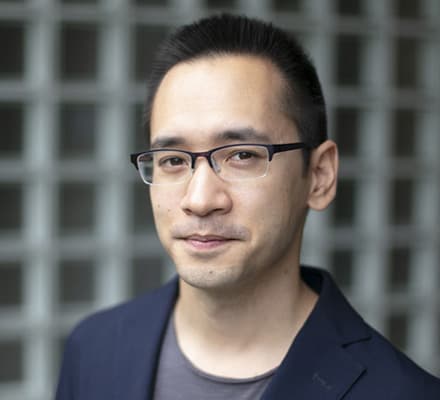
Tricia Wang

Tricia Wang

Advanced AI Society

Organizer / MC

Profile

Continuation

Why continue now

The first event, the Superintelligence for Humanity summit, brought together researchers, builders, and institutional partners around a shared question: what comes after monolithic AI scaling? The continuation salon advanced that conversation into a working agenda - definitions, benchmarks, pilot collaborations, follow-up workshops, and a research community for Artificial Collective Intelligence.

01

From models to infrastructures

02

From alignment to accountable coordination

03

From data extraction to provenance and consent

04

From individual intelligence to human-AI collectives

Follow-up

Next phase

Superintelligence for Humanity will continue through deeper technical discussions and working workshops. The goal is to prepare for ACI as governed cognitive infrastructure: plural, auditable, consent-aware systems that preserve human and institutional agency while enabling human-AI collectives to reason and learn.

01

Deep technical discussion

The series will continue with small, research-intensive sessions that examine ACI as a distributed socio-technical learning problem, not simply as larger models or more agents.

02

Working workshops

Follow-up workshops will focus on definitions, architecture sketches, benchmark proposals, governance primitives, and pilot designs that can be criticized, refined, and tested.

03

Preparation for ACI

The goal is to prepare for ACI as governed cognitive infrastructure: systems that preserve local authority, attribution, uncertainty, disagreement, consent, and institutional memory.

04

Scientific synthesis

The next phase will connect artificial life, social choice, distributed systems, agentic AI, embodied intelligence, and human institutional practice into a coherent research agenda.

What we discussed

01

What Artificial Collective Intelligence should mean as a research field

02

How shared cognitive infrastructure can support human agency and institutional learning

03

How tacit expertise, provenance, consent, and revocability can become design primitives

04

What benchmarks and pilot projects could make ACI concrete

05

Which research tools - artificial life, active inference, context graphs, embodied AI, and multi-agent coordination - can make ACI operational

06

How follow-up workshops can turn deep discussion into testable ACI architectures, protocols, and collaborations

Research tools and frames

The discussion treated ACI as a practical design problem: what concepts, methods, and technical primitives can help humans, agents, and institutions coordinate with accountability, local authority, and persistent memory?

Artificial life

Open-endedness, emergence, and agent ecologies as ways to study intelligence as a living, evolving system rather than a single model artifact.

Active inference

Perception-action loops, uncertainty reduction, and agency-preserving coordination for adaptive systems that learn with people and institutions.

Context graphs

Structured shared memory for provenance, semantic relationships, decision traces, permissions, and institutional continuity.

Embodied AI

Robotics, sensorimotor learning, tacit skill capture, and the physical grounding of cognition in real environments.

World models and simulation

Generative models, causal sandboxes, and scenario testing for evaluating collective action before it is deployed in the world.

Multi-agent coordination

Protocols for delegation, negotiation, verification, disagreement, conflict resolution, and shared goals across human and machine participants.

Provenance and consent infrastructure

Mechanisms for authorship, revocability, accountable abstraction exchange, and governed use of collectively held expertise.

Benchmarks for collective intelligence

Evaluation methods that measure shared context, institutional learning, human agency, and cooperative performance rather than model scale alone.

Format

A small, dialogue-based salon designed for serious exchange rather than formal presentations. The session prioritized short framing remarks, open discussion, and concrete next steps toward an ACI roadmap, joint paper, and follow-up working workshops.

Date

Tuesday, May 26, 2026

Time

3:00-6:00 PM ET

Series

Second event in the Superintelligence for Humanity series

Location

Harvard University, Richard A. and Susan F. Smith Campus Center, 2nd Floor Meeting Room

Context

Boston Tech Week

Access

Closed

Hosted by

Cognisee, Quantum Alliance, and Advanced AI Society

Event closed

Registration is now closed. Video, notes, selected materials, and follow-up workshop information will be published here soon.

Audience

This gathering brought together people thinking deeply about the future of AI and human agency: researchers, founders, investors, technologists, civic leaders, and institutional builders interested in moving beyond today's model-scaling race toward systems that serve human and collective flourishing.

Salon outputs

A sharper ACI research agenda

Candidate benchmarks and evaluation milestones

Pilot collaboration directions

Inputs for a joint paper on Artificial Collective Intelligence

A follow-up workshop program for future research meetings, pilots, and publications

Building Superintelligence for Humanity

Tuesday, May 26, 2026 · 3:00-6:00 PM ET · Richard A. and Susan F. Smith Campus Center · follow-up workshops forthcoming

Event closed

Registration is now closed. Video, notes, selected materials, and follow-up workshop information will be published here soon.